


-
Net Gain - Jazz Trade Williams To Jersey
 February 24, 2011 -
For the second time in two weeks, I’ve had my world rocked while innocently visiting ESPN.com between meetings at work. If not for the current state of unrest in the generally stable Jazz organization, yesterday's announcement would have come as even more of a shock. Still, I was considerably stunned to see the headline, “Nets trade for Jazz PG Williams” pasted across the top of the screen. What?!
Two weeks ago I would have said Deron Williams is untouchable. But a lot changed in two weeks. The Jazz were afraid if they didn’t act preemptively, they would end up like Cleveland and Toronto, whose superstars deserted them to team up in Miami last summer. As a result, the Cavs and Raptors now sit at the bottom of the league standings. That’s what happens when you lose a franchise player and get nothing in return.
The Jazz did what they felt they had to do, and I get that. I just didn’t expect it to happen so suddenly. I've complained in the past that the Jazz front office was too resistant to change. Guess they've proven me wrong.
So let’s break down the trade: The Jazz sent DWill to the Nets for Derrick Favors, Devin Harris, New Jersey’s 2011 1st round pick (unprotected) and Golden State’s 2012 1st round pick, (top-7 protected).
Devin Harris – While no Deron Williams, he is an above-average point guard with great speed and a knack for getting to the hoop. He’s a decent distributor and a great defender. He’s only a year older than Deron (27), and he comes at about half the price.
Derrick Favors – He’s the cornerstone to this trade for the Jazz. Favors was the #3 pick in last year’s draft and has incredible upside. His measurements and athleticism are nearly identical to Dwight Howard, just to put things into perspective. His rookie season performance has been underwhelming thus far, but with his combination of physical gifts, work ethic, and attitude, there’s no reason to believe he won’t improve considerably. He and Jefferson could make a devastating PF/C combo in a couple of years.
New Jersey 2011 1st-round pick – This pick is completely unprotected similar to the Knicks’ pick last year. That means the Jazz could end up with the #1 pick in the draft. More likely, the pick will be in the 6-8 range. I have yet to do any real draft research since I didn’t expect the Jazz to have a pick this year (they traded their own to Minnesota in the Al Jefferson deal), so I have no idea what kind of player they might be able to get. You'll have to stay tuned for that.
Golden State’s 2012 1st round pick – This pick is protected 1-7 in 2012 and 1-6 in 2013. Chances are the Jazz will get to claim it next season if they don’t package it in a future deal. Though I haven't done draft research yet, I have heard the 2012 draft is supposed to be much stronger than 2011, so this could be a valuable pick even if it's in the teens.
So those are the facts. Now for the analysis. My disappointment in this trade is twofold:
1. The Jazz didn’t force the Nets to take Okur’s contract. That would’ve freed up another $10M in cap space for Utah next season. Who knows? Maybe Utah tried and NJ said it was a deal breaker. Still, seems that if you give up your franchise player, you should be able to dump a bad contract as well.
2. The Jazz didn’t get a shooter in return. Anthony Morrow of the Nets is a career 45% 3-pt shooter and would’ve been easy to include from a salary perspective. Devin Harris – while a very good player -- is not a good outside shooter, and the Jazz have now lost their top-4 shooters from last season: Kyle Korver, Wesley Matthews, Mehmet Okur (to injury), and Deron Williams. That's a problem that needs to be addressed.
My ideal Jersey trade would have been Williams, Okur, Fesenko, and Price for Harris, Favors, Morrow, and Troy Murphy ($10M expiring contract), plus the two 1st round picks. Assuming the Jazz even tried, that may have been a little too much for the Nets.
In summary, Utah gets a very good replacement PG and effectively 3 lottery picks in exchange for Williams. In fact, an ESPN analyst (can't remember which one) today said that Favors would be the #1 pick if he had come out this season. All things considered, that’s not too bad a return for a guy the Jazz could’ve easily lost for nothing at the end of next season.
“I'm stunned that the Jazz made this trade. I'm more stunned that I am not devastated that the Jazz made this trade.”
That quote was posted by a fellow Jazz fan on a message board, but it sums up my feelings perfectly. We really won’t know how good this trade was for a few years when the Jazz have utilized (or traded) the 1sr round picks and Favors has had time to develop. But given what I know about the situation and the risk the Jazz faced with Williams, I think they made the right move.
more

-
Snow Flurries In Hell - Farewell To A Legend
 February 12, 2011 –
Clearly I haven’t posted anything for a while. This is due to a combination of factors involving work, travel, family responsibilities, and our DVR crashing. Add to that the fact that the Jazz have been virtually unwatchable lately (even with my NBA League Pass working again), and you get a big gap between articles.
Then Thursday happened. It’s not every day I pull up ESPN.com and get my world rocked. Despite the fact that I was alone at my desk, I felt the urge to look around for the candid cameras, thinking I was being Punked.
This has to be some kind of cruel joke. Jerry Sloan quitting? In the middle of the season, no less? Right up until the actual press conference when he said he was through, I kept expecting something to change his mind.
But obviously it never did. And just like that, the only coach the Jazz have known for the last 23 years walked away from the game, leaving the rest of us wondering what just happened. February 10, 2011 – a date which will live in infamy.
Jerry Sloan epitomized everything I loved about the Jazz: no nonsense, no ego, no fanfare, no self-glorification, no excuses. Just basketball the way it should be played. Five players working together within a system to become greater than the sum of their individual parts – when they actually buy in.
Somehow, somewhere, this recent group of players had gotten away from that. I’m not going to completely throw Deron Williams under the bus because I don’t know what happened behind closed doors. He gets the benefit of the doubt until the evidence proves otherwise. That said, it’s tough to believe he isn’t at least part of the problem. I’ve been a huge fan of his, but the pedestal might be cracking. He seems different this season, and not in a good way. I’ve always detested the notion of superstar players with entitlement attitudes upstaging coaches. If it does turn out that Deron drove Sloan away, that will be tough to forgive.
The optimist in me wants to think the Jazz will somehow be better off now. Sloan was at times stubborn to a fault, and I’ve wondered on numerous occasions if he had failed to adapt well enough to the modern game. Maybe a change is exactly what this team needs. I like Ty Corbin, and I’m excited that Jeff Hornacek will be an assistant as well. I hope Corbin will maintain the same culture of discipline and team play that Sloan employed, but perhaps with a little more flexibility. If he does, this might actually benefit the team in the long run. Perhaps Williams and Sloan simply had an honest personality clash, and Deron will thrive under Corbin. Maybe it really was just Jerry’s time to hang it up.
That’s what the optimist in me wants to think. In reality, I feel like I’ve been punched in the gut. Something just feels wrong about this. What is happening to this team? This organization? Will they continue to be the Jazz that I’ve followed so loyally for nearly 25 years, primarily because they stood in stark contrast to the rest of the NBA and its me-first culture? Larry Miller, Jerry Sloan, John Stockton, and Karl Malone were the Jazz. When the latter two retired, Miller and Sloan soldiered on, and the Jazz remained. When Larry passed away things started to feel a little different; but with Sloan on the bench, it was still the Jazz. You knew he was in charge.
But what now? The team is at a major crossroads, and I feel I’m in a similar position as a fan. It was a strange feeling watching the game last night. Thought I was cheering for the team to the end, in a way I was almost glad to see them lose. It just wouldn’t have felt right to win that first one without Jerry.
more

-
Quarter Season Update
 December 3, 2010 -
In my preseason preview post, I made what I felt was a pretty optimistic prediction of 55 wins for the Jazz this season. Somehow, the Jazz have actually managed to exceed that pace with a 15-5 record through the first 20 games of the season. With so many new players on the roster, I actually expected them to struggle somewhat early on. Sometimes it's nice to be wrong.
I won't take the time now to go through a full analysis of the team, but instead I'll identify a few players who are exceeding, meeting, and falling short of my expectations thus far. I won't cover everyone on the roster -- just those who have stood out in one way or another in my mind.
Exceeding Expectations
Deron Williams – After a bit of a slow start, he’s now playing like a legitimate MVP candidate. Dude is amazing.
Paul Millsap – I expected him to take a back seat to Jefferson. Was I ever wrong. His offensive game has really evolved (just ask the Miami Heat), and he just keeps getting better.
Meeting Expectations
CJ Miles – I almost put him in the top category, but he just hasn’t developed that consistency yet. He continues to show flashes of brilliance but still mixes in too many no-show performances. He’s definitely improving, though.
Al Jefferson – Big Al has exceeded my expectations in some areas (defense) and fallen short in others (rebounding). All in all, he’s about where I expected him to be 20 games into his Jazz tenure. He should continue improving, and he’ll need to for the Jazz to be serious contenders.
Andrei Kirilenko – While there’s always a part of me that’s disappointed when AK consistently fails to be the player he was 5 years ago, he is meeting my expectations if not my hopes.
Falling Short
Gordon Hayward – I was livid when the Jazz drafted him. He began to change my mind a little with his solid performance during summer league. Then he teased me with his 26-point outburst against the Lakers during preseason. Unfortunately he’s done nothing since. It’s still early, but I expect more from the #9 pick.
Raja Bell – I’m basing this solely on his on-court performance and not his locker room impact, which I think is invaluable. Bell is simply not shooting well enough. With the loss of Korver and Matthews, the Jazz desperately need Raja's outside shot.
In summary, this team seems to be coming together a little ahead of schedule. That said, I’m sticking with my prediction of 55 wins. The West is just too good. The Jazz managed to win a few games they probably shouldn’t have, and they’ll need better play out of their wings in particular if they want to keep up the current pace.
more

-
The Comeback Kids
 November 30, 2010 -
This year’s Utah Jazz team is definitely not for the faint of heart. Absolutely unreal how they have managed to consistently fall behind by double digits and then somehow come back to win.
It’s even more amazing when you look at the teams they’ve done it against. The Jazz had 8 such 10+ point comebacks during the month of November and managed to pull them off against some of the top teams in the league
Here's a summary of their conquests:
Nov 6: Clippers – trailed by 18 – won by 2 (double OT)
Nov 9: @Heat – trailed by 22 – won by 2 (OT)
Nov 10: @Magic – trailed by 18 – won by 10
Nov 12: @Hawks – trailed by 11 – won by 4
Nov 13: @Bobcats – trailed by 19 – won by 1
Nov 20: @Blazers – trailed by 11 – won by 9
Nov 26: Lakers – trailed by 19 – won by 6
Nov 28: @Clippers – trailed by 10 – won by 12
With the exception of the perennially woeful Clippers whom the Jazz victimized twice, all the teams on the list made the playoffs last season. Additionally, 6 of the 8 wins occurred on the road and 4 of them were on the 2nd night of a back-to-back -- two areas the Jazz have struggled in recent seasons. I don’t have the time or motivation to do the research right now, but I would be surprised if an NBA team has ever had this many double-digit comeback wins in a single month. Truly a November to remember.
While the ability to come back from seemingly insurmountable deficits it’s certainly a good thing, being forced to do it on a regular basis is not. Championship teams don’t routinely fall behind by double-digit margins. They put teams away early. The Jazz have shown tremendous heart and determination by refusing to quit no matter what the score, but they need to come out of the blocks a little faster if they plan to keep winning.
more

-
Every-Other-Game Al
 November 22, 2010 -
That headline is my new nickname for Al Jefferson, which I sincerely hope doesn’t stick. While scanning through Big Al's game stats, I happened to notice an interesting and somewhat disturbing trend. He seems to have one good game followed by a less-than-stellar outing. With the exception of the first four games of the season, Jefferson has never increased his scoring output in consecutive games. It goes up one game, then drops the next.
Jefferson’s first regular-season game (heretofore referred to as Game 1) in a Jazz uniform was forgettable. He scored only 6 points against Denver. He has failed to reach double digits only one other time since, a 2-point outing against Miami in Game 7. Big Al’s next-lowest scoring totals came in games 11 and 13, in which he put up 12 and 10 points respectively. In odd-numbered games, Jefferson is averaging a dismal 12 points on 40% shooting (31/77).
Even-numbered games have been a completely different story. Jefferson has averaged 20 points on 52% shooting (60/115) in those contests. He is also averaging 5 more minutes played in those games, which I think is more of a result of his higher productivity rather than a cause for it.
Here’s the real kicker: Utah’s record in even-numbered games is 6-1. In odd-numbered games, it's only 3-4.
The Jazz have only won a single game in which Jefferson scored less than 15 points, and that was the Miracle in Miami when Millsap posted a career-high 46 to offset Big Al’s disappointing night. The team clearly needs his scoring punch, and they tend to struggle without it.
We’re only 14 games into an 82-game season, so there’s not much statistical validity to any of this yet. Still, it’s somewhat concerning that Jefferson seems to have trouble putting up strong performances in consecutive games. The silver lining here is that he doesn’t string together consecutive bad games either. My hope is consistency (the good kind) will come in time as he becomes more comfortable with the system and his teammates.
EDIT: I wrote this article before the Sacramento game (#15 -- an odd number) on Monday night. Naturally, Jefferson had to go damage my theory with a 19-point outing against the Kings. Still, it was statistically worse than his previous game (20 pts on 8-13 shooting), so if he turns in a better performance on Wednesday then the pattern remains in tact.
more

-
Paul Millsap Takes His Talents To South Beach
 November 10, 2010 -
Let’s pretend you don’t already know what happened. Let me give you some key statistics from last night's Utah @ Miami game, and you tell me what outcome you would expect:
- Al Jefferson has his worst game of the season, scoring only 2 points on 1-7 shooting and spends the entire 4th quarter on the bench
- Raja Bell manages only 3 points on 1-6 shooting, his lowest output of the year
- CJ Miles hits only 5 of 14 shots including a dismal 0-6 from behind the arc
- The Jazz shoot 27% from the field in the first half and trail by 19 points at halftime
- Deron Williams fouls out
- Ronnie Price and Francisco Elson are in the lineup at the end of the game
- Dwayne Wade scores 39 points while shooting over 50%
- Lebron James posts his first triple-double in a Heat uniform (20 pts, 11 rbs, 14 asts)
- Chris Bosh exceeds his season averages in points, rebounds, assists, and blocks
- The Heat’s “big 3” combine for 76 points, 26 rebounds, 18 assists, 5 blocks, and 2 steals
- Miami attempts 47 free throws to Utah’s 21
- The Heat outrebound the Jazz and have fewer turnovers
Presented with that list of facts prior to the game, I would have guessed Utah loses by at least 20. Well, unless you’ve been living in a sports-free bubble for the past 12 hours, you know that despite the aforementioned statistics, the Jazz managed to mount a furious comeback and stun the Heat in overtime (despite trailing by 8 points with less than 30 seconds in regulation). So how in the world did this happen?
Three words: Paul Freakin’ Millsap
In one of the most impressive individual performances I’ve ever witnessed, Paul Millsap placed the Jazz squarely on his undersized-for-a-power-forward shoulders and willed them to an improbable victory. He scored 46 points (the most of any Jazz player since Karl Malone in 1998) and grabbed 9 rebounds while taking charges, playing tough defense, and doing everything but wiping sweat off the floor during timeouts.
Although most of his damage was predictably done in the paint, Millsap showcased a well-rounded offensive game, including the debut of a new weapon in his arsenal: the 3-point shot. Sap hit three clutch 3-pointers in the final minute of regulation to help force overtime. Prior to this game, he had only made two 3s in his 5-year NBA career. Jazz and Heat fans were equally stunned.
To be fair, Deron Williams (21 pts, 14 asts) and Andre Kirilenko (16 pts, 9 rbs, 7 asts) also contributed solidly to the victory, but this was Millsap’s show. Prior to the game, Chris Webber on NBA TV chose Sap as his fantasy pick of the night, stating that he believed Paul would have a strong performance against Miami’s front line. In his wildest fantasy, however, I don’t think CWebb imagined how right he would be.
Through the first 7 games, Millsap is now averaging 24 points, 11 rebounds, and 3 assists while shooting over 63% from the field. He won’t sustain this level for the entire season, but he’s already proven to be more than just a suitable replacement for Boozer at the power forward position. Millsap is a clear upgrade.
more

-
CJ Miles - Jazz Wild Card
 November 4, 2010 -
In a conversation with a fellow Jazz fan during the preseason, I stated that Utah’s wins this season would be more heavily correlated with CJ Miles’ performance than any other player. My thought process was as follows:
The PG position is rock solid. Deron is the best in the league, and the addition of Watson gives the Jazz a proven vet playing behind him. Price can fill in as needed.
The PF/C rotation is looking great with Jefferson, Millsap, AK, Memo, and a much-improved Fesenko (I'm not even counting Elson who may also contribute). The Jazz are bigger and better here on both sides of the ball over last season and will match up favorably with just about anyone.
The wing positions provide the biggest question marks. The Jazz haven't had consistent scoring from the wing in years. They've also had the propensity to get absolutely lit up by opposing SG/SFs. Bell will help with perimeter defense and outside shooting. Hayward should contribute, but it's tough to expect too much from him this year. Kirilenko will be important, but he's really more of an interior player than a true wing.
I think the major wild card is CJ. If he can provide that scoring punch and defensive energy off the bench, effectively taking some of the pressure off Deron and Al to have a big game every night, the Jazz will be a tough team to beat.
The first four games of the season have certainly supported my theory. Miles has averaged 20 points in Utah’s wins and only 2 points in their losses. Taking that a step further, he was 1-8 FG (0-3 3pt) combined in the two losses and 15-25 FG (8-11 3pt) in the two wins. That's a pretty remarkable contrast.
In the spirit of full disclosure, Miles was hardly the only Jazz player who stepped up his game in Utah's victories. But I can confidently say that no other player performed so poorly in the losses.
As CJ Miles goes, so go the Jazz… At least after four games.
more

-
It's Just Two Games
 October 30, 2010 -
The Cleveland Cavaliers posted the NBA’s best record last season at 61-21. Ironically, they started out by losing their first two games. The 2006-07 Dallas Mavericks finished with a league-best 67-15 record. They began that season with 4 consecutive losses—including a 31-point jack-stomping by the Rockets and an 18-point beat down by (of all teams) the LA Clippers.
So what’s my point? Utah’s lopsided losses to Denver and Phoenix are no reason to hit the panic button.
I’ll admit, I was pretty bummed after both of those games. It’s definitely not the way I wanted – or anticipated – the Jazz to start the season, particularly after watching them go 8-0 in the preseason. However, prior to the surprising preseason win-streak, my expectations were a little more in line with reality.
The Jazz are a remade team this season, with six new rotation players – two of which are starters. They need time to learn the system and get in sync with each other. It will happen. I still have faith in this team, and I am not ready to back off my prediction of a 55-win season. I won’t be surprised if they hover around .500 for the first 10-15 games before things really start to click. After that, watch out.
more

-
Utah Jazz Season Preview 2010-11
 October 25, 2010 -
With the Jazz set to begin playing games that actually count on Wednesday, it’s time for my annual season preview. Heading into last year, I wasn’t feeling much optimism. I expected more of the same: a good-but-not-great regular season followed by an early playoff exit. I officially predicted Utah would win 54 games, earn a 4th seed in the West, and lose easily to the Lakers in the 2nd round. The Jazz simply didn’t have a championship-caliber roster. That fact had been evident to me for quite some time.
My forecast was eerily accurate. Utah won 53 games, landed the 5th seed in the Western Conference (actually tied for 4th), and was unceremoniously swept by LA in the conference semis. Despite the fact they finished only 2 regular-season wins short of the 2nd seed in the uber-competitive West and managed to upset the heavily favored Nuggets (my second most-hated team behind the loathsome Lakers) in the opening round of the playoffs, the Jazz never really looked like a title contender.
Heading into the 2010-11 season, my mood is completely transformed. Considering how many key players the Jazz lost this summer, optimism is somewhat of an unexpected emotion. Three months ago I was ready to give up on Utah’s front office, calling them complacent and content with mediocrity. Now I’m signing their praises.
Let’s start with a statistical recap of last season, followed by my 2010-11 projections:
2009-10 Record: 53-29 (1st-tie in Northwest Division; 4th-tie in Western Conference; Lost in 2nd round of playoffs)
2009-10 Statistical Leaders:
Points: Carlos Boozer (19.5)
Rebounds: Carlos Boozer (11.2)
Assists: Deron Williams (10.5)
Steals: Andrei Kirilenko (1.43)
Blocks: Andrei Kirilenko (1.22)
FG%: Carlos Boozer (56.2%)
3Pt%: Kyle Korver (53.6%)
FT%: Wesley Matthews (82.9%)
Key Additions: Al Jefferson (trade), Raja Bell (free agent), Earl Watson (free agent), Francisco Elson (free agent), Gordon Hayward (1st-round pick), Jeremy Evans (2nd-round pick)
Key Subtractions: Carlos Boozer (free agency), Wesley Matthews (free agency), Kyle Korver (free agency), Kosta Koufos (trade), Ronnie Brewer (trade), Eric Maynor (trade)
Projected Opening Day Starting Lineup:
Deron Williams (PG), Raja Bell (SG), Andrei Kirilenko (SF), Paul Millsap (PF), Al Jefferson (C)
2010-11 Roster/Depth Chart
PG – Deron Williams, Earl Watson, Ronnie Price
SG – Raja Bell, CJ Miles
SF – Andrei Kirilenko, Gordon Hayward, Jeremy Evans
PF – Paul Millsap, Mehmet Okur
C – Al Jefferson, Kyrylo Fesenko, Francisco Elson
Team Strengths
Point Guard – D-Will is the best in the business, and he keeps getting better. The addition of Earl Watson brings an experienced vet to man the ship while Deron gets a breather, which should take off some pressure. Utah will outclass virtually every team at this position.
Interior Scoring – The Jazz always have one of the highest FG% in the league, as their offense is designed to create layups and easy shots. Jefferson, Millsap, and Kirilenko will be a tough frontline for opposing defenses to contain.
Coaching – Despite the fact he’s regularly snubbed for COY, Sloan is a deserving hall-of-famer who demands (and usually receives) the best from his players. This year he actually has the right pieces to work with.
Home Court – There isn’t a more difficult place to play (according to NBA GMs) than Energy Solutions Arena.
Roster Flexibility – Almost every player on the Jazz roster can play multiple positions, giving Sloan the flexibility to create mismatches and exploit opponent weaknesses. The Jazz have at least five realistic options at every position:
PG – Williams, Watson, Price, Hayward, Kirilenko, Miles
SG – Bell, Miles, Price, Williams, Watson, Hayward, Kirilenko
SF – Kirilenko, Miles, Hayward, Bell, Evans
PF – Millsap, Kirilenko, Jefferson, Okur, Evans, Elson
C – Jefferson, Fesenko, Okur, Elson, Millsap
Concerns
Wing scoring – Will anyone step up and provide consistent scoring from the wing? It’s been five years since a Jazz wing averaged over 14 points per game, and that was Kirilenko (who is more of a tandem forward). It’s been over 10 years since a Jazz shooting guard did it, and that was Jeff Hornacek. Utah desperately needs consistent scoring from the wing, whether from a single player or by committee.
Interior defense – While the loss of Boozer (who played defense like a 6-year-old girl) should be addition by subtraction in this area, Jefferson isn’t exactly known as a defensive stopper. He is bigger than Boozer, however, and will block and alter more shots. This was a major weakness last year but did appear improved during the preseason. Still, it’s an area of concern until proven otherwise.
Outside shooting – Particularly with Okur out to start the season, this may be a deficiency. Korver is gone (you can’t help but miss a guy who shoots over 50% from behind the arc), and so is Matthews (38% from 3). Bell and CJ will need to light it up to prevent this from becoming a glaring weakness.
Wildcards
CJ Miles – The Jazz lost three key wings from last season: Matthews, Korver, and Brewer. CJ isn’t the athlete Brewer was, the defender Matthews was, or the shooter Korver was. BUT, he is capable of doing all three of those things in combination better than any of the aforementioned players. Miles appears slotted for a 6th-man role this season, and Utah will need his scoring punch off the bench. If he has the breakout year Jazz fans have been waiting for…
Andrei Kirilenko – Can he stay healthy, physically and mentally? It’s tough to place a value on AK when he plays with confidence and consistency. He’s a game changer. At his best, Kirilenko paired with Williams and Jefferson gives the Jazz a “Big 3” on par with anyone but the Superfriends in Miami (and Utah has a much better supporting cast).
Mehmet Okur – When and how well will he come back from that Achilles injury? If truly healthy, Memo could be an outstanding weapon off the bench at either the 4 or 5 spot.
Player Projections
This is the part where I gaze into my crystal ball (which happens to be a fish bowl that really needs cleaning) and predict individual performances for the season:
Deron Williams established himself as the top PG in the league last season, and he’ll keep that title this year. While his Team-USA buddies whine for trades and collude to join forces in big markets, Deron will quietly deliver an MVP-caliber performance.
Al Jefferson received a guarantee when he came to Utah that Deron Williams would make him an all-star. That promise will be fulfilled in February when Big Al is named an all-star reserve by the coaches. Jefferson will take a few months to achieve peak performance, but he’ll be a regular 20/10 machine by 2011.
Paul Millsap won’t improve much statistically from last season, but he will continue his progression as a player. Sap will be the perfect complement to Jefferson, bringing consistent hustle, energy, and toughness to the front line.
Andrei Kirilenko will have his best season since 2005-06. Though he won’t match his statistical totals from that year, he will have an invaluable impact on games and be a major catalyst to Utah’s success. Despite the potential trade value of his expiring contract, AK will finish the season a Jazzman.
Raja Bell will benefit the team with intangibles as much as he does with his defense and outside shooting. Similar to AK, his stats won’t convey the full value of his presence. Raja’s attitude will help revive the culture of toughness from Jazz teams of the past that seemed to have disappeared in recent seasons.
Mehmet Okur will struggle a little bit and probably have his worst statistical year in a Jazz uniform. Part of this will be due to his injury, and part will be due to a lack of minutes created by the play of Jefferson, Millsap, Kirilenko, and even Fesenko. Still, he will be a valuable contributor off the bench and will win a few games for the Jazz with his clutch shooting.
CJ Miles will finally almost become the player Jazz fans have been hoping he would become since he was drafted straight out of high school five years ago. Though nothing to generate all-star chatter, CJ will have something that could qualify as a breakout year. He won’t, however, deliver quite the needed consistency to make the Jazz true title contenders.
Gordon Hayward will look like a ROY candidate one game and a D-Leaguer the next. Still, Gordon will make a meaningful contribution throughout the season and validate Utah’s decision to make him the 9th pick in the draft (can’t believe I actually said that).
Earl Watson will start slow but finish strong. He will have some fans clamoring for Price early on, but by the all-star break Watson will be the best back-up PG in Utah since Howard Eisley (on his first tour of duty) played behind Stockton.
Kyrylo Fesenko will continue to drive Sloan nuts and remind Jazz fans of a more-athletic Ostertag by looking brilliant one night and failing to show up the next. Even so, Fess will have by far his beast season to date and will be a key cog in the second unit.
Francisco Elson will make KOC look smart. He will more than earn his vet-minimum salary by providing defense, rebounding, and toughness in limited minutes. In fact, he’ll become a fan favorite by getting under the skin of opposing players—something he managed to do twice in the preseason despite only playing in two games.
Ronnie Price will make Sloan wish he had more minutes to dole out. His playing time will be hampered by the presence of Watson, but Price will still find a way to contribute, bringing energy and hustle.
Jeremy Evans will once again make KOC and the Jazz scouting department appear brilliant. This 2nd-round gem will spend time in Orem but will actually work his way into some minutes as the season progresses. Portland is probably already preparing a toxic contract offer for him when he becomes a restricted free agent.
Putting It All Together
Three months ago I never would have imagined saying this, but this Jazz team could actually contend for a title. I didn’t like the roster composition of last year’s team. They were too small, too soft, and didn’t have the right chemistry. Hate to single anyone out, but Utah simply was not going to win on the delicate back of Carlos Boozer.
Following a masterfully orchestrated offseason by Kevin O’Connor, Utah now has the pieces in place to be a legitimate title contender. BUT (and this is a Charles Barkley-sized but), it will take everyone staying healthy and playing up their potential to make it happen. Realistically, I think the Jazz are still a couple of years away.
Based on where the “experts” are predicting them to finish, however, they'll be a lot closer than most people think this season.
Projected 2010-11 Record: 55-27
(1st in Northwest division, 2nd in Western Conference, lose to Lakers in Western Conference Finals)
more

-
Do Preseason Wins Mean Anything?
 October 20, 2010 -
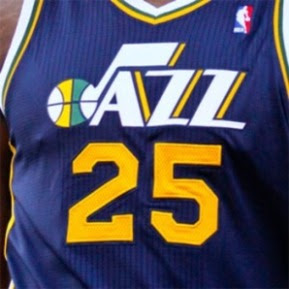
I’ve never been one to put much stock in preseason results. These games are less about winning and more about fine-tuning rosters, evaluating young players, and experimenting with lineup combinations. Starters rarely play more than 30 minutes, and the best players are rarely on the floor at the end, even in close games.
That said, with last night's victory over the Lakers the Jazz are now 7-0 in the preseason, with 5 of those victories coming on the road and 6 coming against 2009-10 playoff teams. That’s gotta count for something, right?
Turns out there is a positive correlation (rated at 0.4 for you stats geeks) between preseason wins and regular-season performance. Since 2004-05, teams that post a winning record in the preseason have made the playoffs 65% of the time, whereas only 38% of teams with a losing preseason record made the postseason. Taking it a step further, every team that has gone undefeated or had only one loss during the preseason made the playoffs. Only one team, the 2007-08 Cavs, earned a playoffs berth after posting one win or less in the preseason.
While I’m encouraged by those statistics, I’m much more excited by the way the new-look Jazz have played than the fact that they have yet to lose. For example:
- I’m excited that Al Jefferson was able to frustrate (if not dominate) Pau Gasol at both ends of the court -- something Boozer could never dream of doing
- I’m excited that Andrei Kirilenko is playing with more confidence than I’ve seen from him in years
- I’m excited that baby-faced Gordon Hayward dropped 26 points on the Lakers (primarily against their starters) while showing off an array of all-around skills
- I’m excited that CJ Miles is embracing his new 6th-man role and providing a much-needed scoring punch off the bench
- I’m excited that Fesenko looks fitter, faster, and more focused than I've ever seen
- I’m excited that Jeremy Evans -- who can jump out of the gym -- is playing light years beyond my wildest expectations and could actually work his way into the rotation this season
- I’m excited that team defense seems to be improving as the preseason progresses
I could actually keep going, and that’s a testament to how good this team has looked. All these positive observations mean much more to me than an undefeated preseason record.
Still, I’d much be 7-0 than 0-7.
more

-
Jazz-Suns Preseason Impressions
 October 15, 2010 -
I came home from work yesterday to a pleasant surprise: The Jazz/Suns preseason game was televised (in HD) on League Pass. This was my first opportunity to actually watch the new-look team (referring both to the uniforms and the new players), so needless to say I was excited.
After watching the game, I’m still excited.
Recognizing that a single preseason game is hardly a valid sample size, here’s my analysis, player by player, of what I saw last night.
Let's start with the new guys:
Al Jefferson: I have officially added Minnesota GM David Kahn to my Christmas card list for the absolute gift he gave us this summer. Jefferson is a beast. Watching him go to work in the post was a thing of beauty. It’s so nice to have a player you can throw the ball into and expect him to score. His footwork, ball fakes, and touch around the basket are superb. Without a double team, he scored at almost every opportunity.
I was surprised at the fluidity of his mid-range shot. His passing, believed to be one of his weaknesses, looked solid to me. He had 3 assists, including a beauty to a cutting Millsap for a layup.
I was literally giddy after witnessing Jefferson’s performance. I know it’s just the preseason, but he was unstoppable in the post. Once he gets a little more comfortable in the system, I could see him averaging 25 points per game. Yes, he looked that good. Carlos Boozer will not be missed. Period.
Gordon Hayward: On the one hand, he definitely looked like a rookie. On the other hand, he showed me enough positives to make me feel he will turn into a legit player. I’m just not sure how long it will take.
He wasn’t abused on defense the way I feared he might be. On offense, his shot wasn’t falling and he clearly struggled to finish through contact. He seemed to be thinking too much and probably still has some nerves. He did, however, show some great court vision and passing skills. The ball doesn’t stop when it comes to him. He seems to understand the offense already, which is a great sign. I’m still not convinced the Jazz made the right pick, but I’m also not convinced they didn’t.
Jeremy Evans: Holy freakin’ pogo stick! This kid can jump. High. Evans was probably the player I was most excited to watch after reading about his freakish athleticism. He didn’t disappoint. The guy is just instant energy. While I originally expected Evans to spend the year with the Flash (if he even made the final roster), I now think he may crack the rotation at some point. Last night he had 12 points, 4 rebounds, 3 steals, and 1 assist… in only 13 minutes. He needs polish and he needs muscle, but this kid has a bright future. KOC found another 2nd-round steal.
Earl Watson: I was thrilled when the Jazz signed him. He didn’t show me much last night, although he did have 4 assists with no turnovers. It will take a while for him to get comfortable, but I think he’ll be a solid backup for Deron. I love his intensity on defense.
Raja Bell: Good to have him back in a Jazz uniform. Didn’t do much statistically, but you can tell he just fits on this team.
Now for the incumbents:
Deron Williams: He was solid but not spectacular. You can tell he has another gear that he simply hasn’t engaged yet because there is no reason to. His play was a little sloppy, but his brilliance still shone through at times. I expect an MVP-caliber year from him.
Andrei Kirilenko: What is up with the hair? A few more inches and he’ll have the full Fabio. Aside from that, he looked good. Nothing we haven’t seen before. He does so many things that don’t show up in the box score, and last night was no exception.
Paul Millsap: He had a solid game. Didn’t have a particularly eye-popping stat line, but he looked good. While Jefferson’s presence will probably hurt his stats a little, I think their games will actually complement each other pretty well.
Kyrylo Fesenko: Fess actually looks quite a bit better to me. I heard he dropped 20 pounds, and it really shows with his improved mobility. He is amazingly quick and agile for a player his size. He still makes boneheaded mistakes, but this performance gave me hope that he may actually have a breakout season.
CJ Miles: He looked OK. Not a great game, but definitely not a poor one. He was 2 for 2 from behind the arc, so that’s a bonus. I may have my expectations a little too high for CJ, mostly because I think the Jazz will really need him this year. I hope he finds his groove quickly.
Ronnie Price: Barely played and didn’t take a shot. I think we know what to expect from him by now.
Everybody Else (Gaines, Jeffers, Thompson, Nichols): These four are competing for what will likely be a single, final roster spot. None of them particularly stood out last night. Gaines is a long shot simply because Utah already has 3 PGs with guaranteed contracts (Williams, Price, Watson). Jeffers plays hard but is undersized (I think he got his shot blocked 3 or 4 times). I didn’t really get much of a feel either way for Thompson or Nichols, so I have no opinion yet as to whom I prefer.
In summary, I was pretty impressed with the team as a whole. They still have rough edges as would be expected with so many new faces. Still, something just feels good about this group. Can’t wait to watch more of them and see how accurate my first impressions prove to be.
more

-
From Offseason to Preseason
 October 6, 2010 -
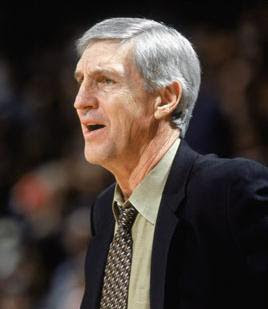
Kevin O’Connor did his job. Now it’s Jerry Sloan’s turn.
Following one of the busiest offseasons in team history, the Utah Jazz are now officially in preseason mode. Sloan has the not-insignificant task of integrating a plethora (can’t ever use that word without thinking of El Guapo on The Three Amigos) of new faces, most of whom will be expected to contribute in a big way. This was by no stretch of the imagination a typical Jazz summer.
To put things in perspective, it’s entirely possible that Deron Williams will be the only Jazz player to start the first game of both the 2009-10 and 2010-11 seasons. That’s big change, especially for a conservative franchise like Utah. You have to go back five years (Deron’s rookie season) to find the last time 3 starters changed from one season to the next. The Jazz have never changed 4 starters over one season in my 20+ years as a fan.
To put it lightly, Sloan has his work cut out for him.
That said, this may end up being one of his easier coaching years in recent history. Why, you ask? Because looking at this roster, I see more toughness and fewer egos. I see guys who are committed to working hard and getting better. I see guys who actually want to be on this team and seem to genuinely like each other. Music to Jerry's ears.
(I also see more size and athleticism than I ever recall seeing on a Utah team, but I’ll save that for another post.)
It can be tough to separate fact from fiction in the world of blogs and internet bulletin boards, but from everything I gather, this team seems to be on the same page. The new guys are all saying the right things, and the “inside” scoop is that all the players are particularly high on Jefferson, Hayward, and 2nd-round pick, Jeremy Evans.
I’m not ready to make my season predictions yet (I’ll wait to watch a few preseason games before doing that), but I’m feeling optimistic. Jerry has a big job to do, but I think he’ll do it well. And I think he’ll enjoy it.
more

Subscribe to:
Posts (Atom)
