


Showing posts with label Kevin O'Connor. Show all posts
Showing posts with label Kevin O'Connor. Show all posts
-
Utah Jazz Season Preview 2010-11
 October 25, 2010 -
With the Jazz set to begin playing games that actually count on Wednesday, it’s time for my annual season preview. Heading into last year, I wasn’t feeling much optimism. I expected more of the same: a good-but-not-great regular season followed by an early playoff exit. I officially predicted Utah would win 54 games, earn a 4th seed in the West, and lose easily to the Lakers in the 2nd round. The Jazz simply didn’t have a championship-caliber roster. That fact had been evident to me for quite some time.
My forecast was eerily accurate. Utah won 53 games, landed the 5th seed in the Western Conference (actually tied for 4th), and was unceremoniously swept by LA in the conference semis. Despite the fact they finished only 2 regular-season wins short of the 2nd seed in the uber-competitive West and managed to upset the heavily favored Nuggets (my second most-hated team behind the loathsome Lakers) in the opening round of the playoffs, the Jazz never really looked like a title contender.
Heading into the 2010-11 season, my mood is completely transformed. Considering how many key players the Jazz lost this summer, optimism is somewhat of an unexpected emotion. Three months ago I was ready to give up on Utah’s front office, calling them complacent and content with mediocrity. Now I’m signing their praises.
Let’s start with a statistical recap of last season, followed by my 2010-11 projections:
2009-10 Record: 53-29 (1st-tie in Northwest Division; 4th-tie in Western Conference; Lost in 2nd round of playoffs)
2009-10 Statistical Leaders:
Points: Carlos Boozer (19.5)
Rebounds: Carlos Boozer (11.2)
Assists: Deron Williams (10.5)
Steals: Andrei Kirilenko (1.43)
Blocks: Andrei Kirilenko (1.22)
FG%: Carlos Boozer (56.2%)
3Pt%: Kyle Korver (53.6%)
FT%: Wesley Matthews (82.9%)
Key Additions: Al Jefferson (trade), Raja Bell (free agent), Earl Watson (free agent), Francisco Elson (free agent), Gordon Hayward (1st-round pick), Jeremy Evans (2nd-round pick)
Key Subtractions: Carlos Boozer (free agency), Wesley Matthews (free agency), Kyle Korver (free agency), Kosta Koufos (trade), Ronnie Brewer (trade), Eric Maynor (trade)
Projected Opening Day Starting Lineup:
Deron Williams (PG), Raja Bell (SG), Andrei Kirilenko (SF), Paul Millsap (PF), Al Jefferson (C)
2010-11 Roster/Depth Chart
PG – Deron Williams, Earl Watson, Ronnie Price
SG – Raja Bell, CJ Miles
SF – Andrei Kirilenko, Gordon Hayward, Jeremy Evans
PF – Paul Millsap, Mehmet Okur
C – Al Jefferson, Kyrylo Fesenko, Francisco Elson
Team Strengths
Point Guard – D-Will is the best in the business, and he keeps getting better. The addition of Earl Watson brings an experienced vet to man the ship while Deron gets a breather, which should take off some pressure. Utah will outclass virtually every team at this position.
Interior Scoring – The Jazz always have one of the highest FG% in the league, as their offense is designed to create layups and easy shots. Jefferson, Millsap, and Kirilenko will be a tough frontline for opposing defenses to contain.
Coaching – Despite the fact he’s regularly snubbed for COY, Sloan is a deserving hall-of-famer who demands (and usually receives) the best from his players. This year he actually has the right pieces to work with.
Home Court – There isn’t a more difficult place to play (according to NBA GMs) than Energy Solutions Arena.
Roster Flexibility – Almost every player on the Jazz roster can play multiple positions, giving Sloan the flexibility to create mismatches and exploit opponent weaknesses. The Jazz have at least five realistic options at every position:
PG – Williams, Watson, Price, Hayward, Kirilenko, Miles
SG – Bell, Miles, Price, Williams, Watson, Hayward, Kirilenko
SF – Kirilenko, Miles, Hayward, Bell, Evans
PF – Millsap, Kirilenko, Jefferson, Okur, Evans, Elson
C – Jefferson, Fesenko, Okur, Elson, Millsap
Concerns
Wing scoring – Will anyone step up and provide consistent scoring from the wing? It’s been five years since a Jazz wing averaged over 14 points per game, and that was Kirilenko (who is more of a tandem forward). It’s been over 10 years since a Jazz shooting guard did it, and that was Jeff Hornacek. Utah desperately needs consistent scoring from the wing, whether from a single player or by committee.
Interior defense – While the loss of Boozer (who played defense like a 6-year-old girl) should be addition by subtraction in this area, Jefferson isn’t exactly known as a defensive stopper. He is bigger than Boozer, however, and will block and alter more shots. This was a major weakness last year but did appear improved during the preseason. Still, it’s an area of concern until proven otherwise.
Outside shooting – Particularly with Okur out to start the season, this may be a deficiency. Korver is gone (you can’t help but miss a guy who shoots over 50% from behind the arc), and so is Matthews (38% from 3). Bell and CJ will need to light it up to prevent this from becoming a glaring weakness.
Wildcards
CJ Miles – The Jazz lost three key wings from last season: Matthews, Korver, and Brewer. CJ isn’t the athlete Brewer was, the defender Matthews was, or the shooter Korver was. BUT, he is capable of doing all three of those things in combination better than any of the aforementioned players. Miles appears slotted for a 6th-man role this season, and Utah will need his scoring punch off the bench. If he has the breakout year Jazz fans have been waiting for…
Andrei Kirilenko – Can he stay healthy, physically and mentally? It’s tough to place a value on AK when he plays with confidence and consistency. He’s a game changer. At his best, Kirilenko paired with Williams and Jefferson gives the Jazz a “Big 3” on par with anyone but the Superfriends in Miami (and Utah has a much better supporting cast).
Mehmet Okur – When and how well will he come back from that Achilles injury? If truly healthy, Memo could be an outstanding weapon off the bench at either the 4 or 5 spot.
Player Projections
This is the part where I gaze into my crystal ball (which happens to be a fish bowl that really needs cleaning) and predict individual performances for the season:
Deron Williams established himself as the top PG in the league last season, and he’ll keep that title this year. While his Team-USA buddies whine for trades and collude to join forces in big markets, Deron will quietly deliver an MVP-caliber performance.
Al Jefferson received a guarantee when he came to Utah that Deron Williams would make him an all-star. That promise will be fulfilled in February when Big Al is named an all-star reserve by the coaches. Jefferson will take a few months to achieve peak performance, but he’ll be a regular 20/10 machine by 2011.
Paul Millsap won’t improve much statistically from last season, but he will continue his progression as a player. Sap will be the perfect complement to Jefferson, bringing consistent hustle, energy, and toughness to the front line.
Andrei Kirilenko will have his best season since 2005-06. Though he won’t match his statistical totals from that year, he will have an invaluable impact on games and be a major catalyst to Utah’s success. Despite the potential trade value of his expiring contract, AK will finish the season a Jazzman.
Raja Bell will benefit the team with intangibles as much as he does with his defense and outside shooting. Similar to AK, his stats won’t convey the full value of his presence. Raja’s attitude will help revive the culture of toughness from Jazz teams of the past that seemed to have disappeared in recent seasons.
Mehmet Okur will struggle a little bit and probably have his worst statistical year in a Jazz uniform. Part of this will be due to his injury, and part will be due to a lack of minutes created by the play of Jefferson, Millsap, Kirilenko, and even Fesenko. Still, he will be a valuable contributor off the bench and will win a few games for the Jazz with his clutch shooting.
CJ Miles will finally almost become the player Jazz fans have been hoping he would become since he was drafted straight out of high school five years ago. Though nothing to generate all-star chatter, CJ will have something that could qualify as a breakout year. He won’t, however, deliver quite the needed consistency to make the Jazz true title contenders.
Gordon Hayward will look like a ROY candidate one game and a D-Leaguer the next. Still, Gordon will make a meaningful contribution throughout the season and validate Utah’s decision to make him the 9th pick in the draft (can’t believe I actually said that).
Earl Watson will start slow but finish strong. He will have some fans clamoring for Price early on, but by the all-star break Watson will be the best back-up PG in Utah since Howard Eisley (on his first tour of duty) played behind Stockton.
Kyrylo Fesenko will continue to drive Sloan nuts and remind Jazz fans of a more-athletic Ostertag by looking brilliant one night and failing to show up the next. Even so, Fess will have by far his beast season to date and will be a key cog in the second unit.
Francisco Elson will make KOC look smart. He will more than earn his vet-minimum salary by providing defense, rebounding, and toughness in limited minutes. In fact, he’ll become a fan favorite by getting under the skin of opposing players—something he managed to do twice in the preseason despite only playing in two games.
Ronnie Price will make Sloan wish he had more minutes to dole out. His playing time will be hampered by the presence of Watson, but Price will still find a way to contribute, bringing energy and hustle.
Jeremy Evans will once again make KOC and the Jazz scouting department appear brilliant. This 2nd-round gem will spend time in Orem but will actually work his way into some minutes as the season progresses. Portland is probably already preparing a toxic contract offer for him when he becomes a restricted free agent.
Putting It All Together
Three months ago I never would have imagined saying this, but this Jazz team could actually contend for a title. I didn’t like the roster composition of last year’s team. They were too small, too soft, and didn’t have the right chemistry. Hate to single anyone out, but Utah simply was not going to win on the delicate back of Carlos Boozer.
Following a masterfully orchestrated offseason by Kevin O’Connor, Utah now has the pieces in place to be a legitimate title contender. BUT (and this is a Charles Barkley-sized but), it will take everyone staying healthy and playing up their potential to make it happen. Realistically, I think the Jazz are still a couple of years away.
Based on where the “experts” are predicting them to finish, however, they'll be a lot closer than most people think this season.
Projected 2010-11 Record: 55-27
(1st in Northwest division, 2nd in Western Conference, lose to Lakers in Western Conference Finals)
more

-
From Offseason to Preseason
 October 6, 2010 -
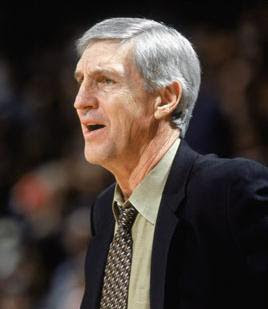
Kevin O’Connor did his job. Now it’s Jerry Sloan’s turn.
Following one of the busiest offseasons in team history, the Utah Jazz are now officially in preseason mode. Sloan has the not-insignificant task of integrating a plethora (can’t ever use that word without thinking of El Guapo on The Three Amigos) of new faces, most of whom will be expected to contribute in a big way. This was by no stretch of the imagination a typical Jazz summer.
To put things in perspective, it’s entirely possible that Deron Williams will be the only Jazz player to start the first game of both the 2009-10 and 2010-11 seasons. That’s big change, especially for a conservative franchise like Utah. You have to go back five years (Deron’s rookie season) to find the last time 3 starters changed from one season to the next. The Jazz have never changed 4 starters over one season in my 20+ years as a fan.
To put it lightly, Sloan has his work cut out for him.
That said, this may end up being one of his easier coaching years in recent history. Why, you ask? Because looking at this roster, I see more toughness and fewer egos. I see guys who are committed to working hard and getting better. I see guys who actually want to be on this team and seem to genuinely like each other. Music to Jerry's ears.
(I also see more size and athleticism than I ever recall seeing on a Utah team, but I’ll save that for another post.)
It can be tough to separate fact from fiction in the world of blogs and internet bulletin boards, but from everything I gather, this team seems to be on the same page. The new guys are all saying the right things, and the “inside” scoop is that all the players are particularly high on Jefferson, Hayward, and 2nd-round pick, Jeremy Evans.
I’m not ready to make my season predictions yet (I’ll wait to watch a few preseason games before doing that), but I’m feeling optimistic. Jerry has a big job to do, but I think he’ll do it well. And I think he’ll enjoy it.
more

-
Utah Jazz Offseason Grade
 September 24, 2010 -
At one point during the first part of July, the Jazz appeared headed for disaster. They had lost four key contributors from the team that began the 2009-10 season (Carlos Boozer, Kyle Korver, Ronnie Brewer, and Eric Maynor) and got no one back in return. Thanks to the Portland Trailblazers, who seem to have made it their mission to offer oversized, front-loaded contracts to all of Utah’s restricted free agents, the Jazz were on the verge of losing a fifth (Wesley Matthews). To make matters worse, Utah was still over the salary cap and therefore didn’t have the means to pursue any marquee free agents from other teams. The future looked bleak, raising fears that Deron Williams would soon want out. The logical next steps were for Sloan to announce his retirement, Nuskin to drop their sponsorship of the Jazz Dancers, and the ESA scoreboard to crash down on center court.
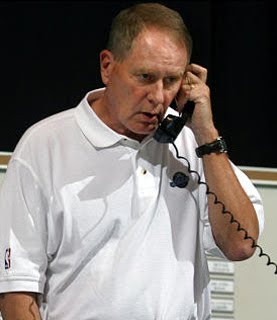
Just as the last glimmers of hope were flickering out, Kevin O’Connor ducked into a phone booth, exchanged his suit for some purple and green tights, and emerged as Super GM. (OK, that was lame, but KOC really did pull off a minor miracle when all seemed lost.) Over the remainder of the summer, the Jazz did more than just salvage their offseason—they somehow managed to actually improve their roster over last year.
It all started with a move that reminded me of the Lakers’ infamous “trade” with Memphis to acquire Pau Gasol for a ham sandwich and a bag of stale chips (about which I’ve always wondered who in the LA front office had incriminating photos of whom in the Memphis front office). The Jazz managed to steal Al Jefferson from Minnesota for Kosta Koufos, 2 protected 1st round draft picks, and a trade exception. Sucks to be a T-Wolves fan.
Jefferson is a beast. While it may take him a while to get comfortable with the new system, he should eventually have no trouble replacing Boozer’s scoring and rebounding. Plus he’s bigger and younger. This was a clear upgrade.
Next, the Jazz brought back Raja Bell on a free agent contract. Bell should be able to replace Matthews production for about a third of the price. He also brings leadership and toughness that the Jazz have been lacking in recent years.
After trading for Jefferson and signing Bell, I fully expected the Jazz to round out their roster with rookies and D-leaguers just to keep the tax bill to a minimum. But KOC wasn’t finished. First, he signed 7-footer Francisco Elson who will give the Jazz additional size and athleticism behind Jefferson at center. I don’t expect too much from Elson, but with Okur likely to miss the first part of the season, this was an important signing.
Finally, the Jazz shored up another weakness by signing Earl Watson to backup Williams at the point. I was actually thrilled with this move. Watson is a tough defender and can run an offense effectively. Though he won’t see much playing time behind Williams, he gives the Jazz exactly what they need—a savvy vet to prevent the game from slipping away while Deron gets a breather.
In my 20+ years as a Jazz fan, I don’t ever recall a roster makeover quite this drastic. I’ve been screaming for Utah to make some moves for a few years now, and they finally did it. I really like this team on paper. The Jazz definitely got bigger and tougher. The biggest question is how well will they jell together?
Training camp starts next week, so we'll find out soon enough. If this group can develop the right chemistry, they could really make some noise.
Additions: Al Jefferson (trade), Raja Bell (FA), Francisco Elson (FA), Earl Watson (FA), Gordon Hayward (draft), Jeremy Evans (draft)
Subtractions: Carlos Boozer (FA - Chicago), Wesley Matthews (FA - Portland), Kyle Korver (FA - Chicago), Ronnie Brewer (trade – Memphis), Eric Maynor (trade – OKC), Kosta Koufos (trade – Minny)
Offseason Grade: A-minus. They certainly exceeded my expectations and made the most of a potentially devastating situation. Had the Jazz managed to keep Wesley Matthews, they would have earned an A.
more

-
Raja Bell Is Back
 July 22, 2010 -
I’m still bitter about losing Wesley Matthews to the Blazers, but learning that Raja Bell has decided to sign with the Jazz is a nice consolation prize. What makes it all the more sweet is the fact that in opting for Utah, Bell rejected a personal sales pitch from Kobe Bryant to join the Lakers.
If you want to know why Kobe wanted Raja on his team, just take a look at the picture. In reference to that incident, I would normally lose respect for a player who laid a clothesline on an opponent in the middle of a game. But since Bell did this to Kobe Bryant, I’m completely fine with it. In fact, I respect him more for it. (For those not familiar with the situation, Bell was heavily provoked by cheap elbows from Kobe throughout the entire series. And yes, Bell was ejected and suspended for the maneuver.)
I was sorely disappointed when Bell left the Jazz to sign with the Suns 5 years ago, and I’m thrilled to have him back now. With Matthews gone, the Jazz desperately need his defense. With Korver gone, the Jazz need his 3-point shooting. But most of all, the Jazz need his toughness. Welcome back, Raja.
Gotta hand it to Kevin O'Connor. He's taken what was shaping up to be a disastrous offseason and turned it into something pretty exciting.
more

-
A Rabbit Named Al Jefferson
 July 15, 2010 -
“Greg Miller and Kevin O’Connor had better pull a serious rabbit out of their collective hat, or they stand to lose a lot of fans this season.”
I posted that quote a few days ago in reference to the mass exodus of talent the Jazz have experienced in the past 12 months. Fortunately Miller and KOC managed to pull out a 6'10" 260-lb rabbit who has the potential to more than replace the productivity lost when Boozer left for Chicago. Hallelujah! The Jazz front office actually did something positive. They renewed my hope that they just might care about more than profitability.
While this move certainly atones for the failure to trade Boozer last season, it doesn't mean that all is entirely forgiven. It also does not make the Jazz immediate title contenders (though it puts them much closer than they were just a day ago). Utah still needs to make another move or two if they want to legitimately challenge the Lakers, not to mention the new Superfriends in Miami.
At least now I'm excited again. Can't wait to see what comes next!
more

-
Front Office Wakeup Call
 July 12, 2010 -
I try to give people the benefit of the doubt. I really do. As a businessman, I understand the strategy and perspective that goes into many decisions that may not be apparent from an outside perspective. In short, I realize that “good” decisions may look like “bad” decisions to the uninformed.
Conversely, my business experience has also shown me that smart, informed people sometimes make extremely poor decisions.
The Jazz front office has been pursuing a stay-the-course strategy for years now. News flash: It’s not working. Actually I should clarify that. If their goal is to always be a mid-tier playoff team without any real shot at winning a title, then the strategy is working fine. If they, like most of us fans, have championship aspirations, then they need to make some changes.
When the Jazz selected Gordon Hayward with the 9th pick, I was livid. I honestly felt like I had been punched in the stomach. I have since realized that my disappointment over that draft pick was really a culmination of frustration with management’s apparent unwillingness to be aggressive and take the necessary calculated risks to become a legitimate title contender. For the Jazz, it’s all about maintaining the status quo. They put out a winning product that makes the playoffs year after year. This allows them to sell enough tickets to turn a profit. That seems to be more important than winning a championship. As a business man, I get it. As a fan, I hate it.
Prior to the 2006 NBA draft, the Jazz, after dropping to the 6th spot thanks to lousy luck with the ping pong balls, made an aggressive move to trade up to #3 so they could select Deron Williams, giving up 3 first round picks in the process. It was a gamble that paid off, and the kind of risk that championship teams have to take.
In 2008, Utah traded an expiring contract (Gordan Giricek) and a future 1st-round pick (which ended up being #23 this year) for Kyle Korver. Another calculated risk that arguably paid off. The Jazz needed outside shooting, and they got one of the best. Unfortunately injuries marred his performance somewhat, but it was still a smart move designed to make the team better.
Since that time, however, the Jazz have retreated back to the ultra-conservative approach. This has been particularly manifest in the past 12 months. Need proof?
Exhibit 1: The Jazz trade Eric Maynor and Matt Harpring to OKC for nothing more than salary cap relief.
Exhibit 2: The Jazz trade Ronnie Brewer to Memphis for a conditional future 1st-round draft pick.
Exhibit 3: The Jazz DON’T trade Carlos Boozer before the 2010 trade deadline, failing to acquire any assets in exchange for an all-star whom they were likely to lose for nothing in free agency.
Exhibit 4: Jazz have thus far failed to trade Andrei Kirilenko and his valuable soon-to-be-expiring contract.
Exhibit 5: Jazz fail to move up in the 2010 draft to acquire a potential star (i.e. Turner, Favors, Cousins) despite the fact that Philly was supposedly willing to trade the #2 pick to a team that would take Elton Brand’s contract.
Exhibit 6: The Jazz NEVER acquire 1st-round picks for cash considerations. The Dallas Mavericks bought the #25 pick (Dominique Jones, a player I would have loved to see on the Jazz) for cash.
Exhibit 7: The Jazz fail to work a sign-and-trade for Boozer, losing him to Chicago for nothing but a trade exception.
Exhibit 8: The Jazz lose Kyle Korver (who, by the way, set the NBA record for 3-pt percentage last season) to Chicago for no compensation and reportedly didn’t even make him a respectable offer.
I won’t enter this as official evidence since the jury is still out, but the Jazz also appear to be on the verge of losing Wesley Matthews for no compensation, as Portland gave him a bigger offer than Utah expected.
I don’t recall ever feeling this frustrated with the Jazz organization, and I know many others who feel the same way. If Utah doesn’t match the offer to Matthews, they will have watched 5 key contributors from last season walk away with nothing to show for it but a lower payroll. How is Deron Williams going to respond to this?
Greg Miller and Kevin O’Connor had better pull a serious rabbit out of their collective hat (wanted to use another word there), or they stand to lose a lot of fans this season. Perhaps more importantly, they stand to lose their franchise point guard in two years.
more

-
Utah Jazz Offseason a Major...?
 August 31, 2009 -
Not quite sure how to finish that sentence. Success? Bust? Disappointment? Guess it all depends on your perspective. At this point, the only word I can really settle on is Bore.
So what happened to the most exciting summer in Jazz history? With eight free agents including four of the team’s key players (Boozer, Memo, Millsap, and Korver), we were guaranteed to see some major movement. The Jazz had everything you need to pull off a blockbuster: expiring contracts, all-star talent, young players with upside, and the highly coveted NY 2010 draft pick. All we fans had to do was grab some popcorn, pull up a chair, and watch the events unfold…
This summer has been like meeting a hot girl who flirts with you but then stands you up for the date.
Did you know the Jazz are the only team in the entire NBA who have not either added a new player to their roster (aside from their draft picks) or had another team sign away one of their free agents? In the meantime, the majority of contenders in the West have made at least one significant move to improve their team. Check out this list based on 2009 playoff seeds:
1. Lakers – Signed Ron Artest
2. Nuggets – A few minor deals, but no major changes
3. Spurs – Traded for Richard Jefferson; signed Antonio McDyess
4. Houston – Signed Tervor Ariza (but lost Artest to the Lakers and Yao to injury)
5. Portland – Signed Andre Miller
6. Dallas – Traded for Shawn Marion; signed Drew Gooden
7. Hornets – Traded for Emeka Okafor
8. Jazz – I heard they added a new towel boy for home games
Clearly five of the teams ahead of the Jazz in last season’s standings pulled off deals that make them stronger, at least on paper. You never know how it will translate on the court, but the West definitely looks tougher than ever.
Training camp doesn’t start for another month, so things could still change between now and then. I’m holding out hope that KOC has a few tricks up his sleeve, because it will be a major letdown to start the season with the same cast that barely made the playoffs last year. For now, the Jazz offseason remains an unanswered question.
more

-
3-Team Trade Idea
 August 7, 2009 -
Following up on my August 25th thought, I came up with a 3-team trade idea involving both New Jersey and Golden State. A fellow Jazz fan in the Bay Area tipped me off to the notion that GS has interest in Yi Jianlian based on the area's significant Asian population and the fact that Yi's game fits the Warrior's offense. With that in mind, here's my proposal:
Utah sends Boozer & CJ to New Jersey
Golden State sends Kalena Azubuike to New Jersey and Brandan Wright, Speedy Claxton, & Acie Law to Utah
New Jersey sends Courtney Lee to Utah and Yi Jianlian & Bobby Simmons to Golden State
Here's the breakdown for each team:
New Jersey - They get the low-post scorer and rebounder they desperately need. Boozer could actually be a great fit playing next to Brook Lopez and would likely sign an extension if the Nets wanted to keep him. NJ also gets Azubuike and CJ to replace Lee and Simmons at the wings. New lineup:
PG - Harris, Alston, Dooling
SG - Azubuike, Terrance Williams
SF - CJ, CDR, Hayes
PF - Boozer, Sean Williams
C - Lopez, Boone, Battie
Golden State - They give up two bench players and two expiring contracts in exchange for a 7-ft shooting PF they apparently covet, along with a tall, 3-pt shooting wing with a large expiring contract. Both players seem like they would fit well in GS. New lineup:
PG - Ellis, Curry
SG - Jackson, Morrow
SF - Maggette, Simmons, George
PF - Randolph, Yi
C - Biedrins, Turiaf
Utah - They dump Boozer and CJ in exchange for two young, talented players and cap relief. Lee and Wright both have great potential and should be immediate rotation players. The Jazz also take back $6M less in salary than they send out, resulting in a $12M combined luxury tax savings this season. They may also be able to save more by buying out Claxton and/or Law. New lineup:
PG - Deron, Price, Maynor
SG - Lee, Korver
SF - AK, Brewer
PF - Millsap, Wright
C - Memo, Koufos, Fess
I think this is a trade that actually benefits all three teams. If I had KOC's number, his phone would be ringing right now.
more

-
3 Teams, 20 Boozer Trade Ideas
 July 28, 2009 -
I've been playing around on ESPN Trade Machine to see how many plausable trade scenarios I could come up with for the teams rumored to want Boozer. I intentionally did not include NY because I just can't imagine the Jazz will do a deal with them, and they really don't have any players I want.
While some of these trades would obviously make me happier than others, I only listed deals that I would actually do (assuming no better offers were on the table). Seems like KOC should be able to make at least one of these happen:
Miami
Boozer for Beasley and Haslem
Boozer for Chalmers, Cook, Blount, and 2010 1st-round pick
Boozer and Kirilenko for Beasley and O’Neal
Boozer and CJ for Beasley, Blount, and Cook
Boozer and CJ for Beasley, Haslem, and Cook
Boozer for Haslem, Wright, and Cook + CJ for Chalmers (separate transaction to take advantage of trade exception)
Boozer, CJ, and Harpring for Beasley, Haslem, and Blount
Summary: Any Miami trade must include either Beasley or both Chalmers and Cook.
New Jersey
Boozer for Lee and Simmons
Boozer for Lee, Battie, and Dooling
Boozer for Lee, Battie, and Yi
Boozer and CJ for Lee, Simmons, and Boone
Boozer and Harpring for Lee, Simmons, and Dooling
Boozer, CJ, and Harpring for Lee, Simmons, and Battie
Summary: Any NJ trade must include Courtney Lee (unless of course Brook Lopez is available...)
Chicago
Boozer for Thomas and James
Boozer for Hinrich and Noah
Boozer and Fess for Salmons and James
Boozer and CJ for Hinrich and Thomas
Boozer and CJ for Hinrich, James, and 2010 1st-round pick
Boozer and Harpring for Thomas and Miller
Boozer, Kirilenko, and CJ for Hinrich, Thomas, Deng, and James
Summary: There are a bunch of Chicago players I would happily take back for Boozer
more

-
Five Mistakes the Jazz Could Make This Summer
 June 1, 2009 -
I’ve been speculating heavily in recent weeks about what moves the Jazz will make this summer. Unfortunately, there are too many factors beyond the team’s control at this point for them to do much more than theoretical planning. The decisions the front office makes this summer (and potentially up to next season’s trade deadline) will have a profound impact on the future success of this team. The Jazz have enough talent and resources to transform themselves into immediate title contenders with a few key moves. Conversely, they could also condemn themselves to years of mediocrity with a few key blunders.
With that in mind, I have identified five major mistakes the Jazz must not make this summer:
Mistake #1: Overpay for Boozer – The Jazz should be all too familiar with the perils of bad contracts. Perennial underachiever, Greg Ostertag, was overpaid for years, and his contract prevented the Jazz from acquiring additional talent that could have helped bring a title to Utah. Andrei Kirilenko is the most recent example of an overpaid underachiever. His max deal has two years left and represents a huge burden to the team’s current financial flexibility.
On one hand, Carlos Boozer is a two-time NBA all-star and Olympic gold medalist. He is one of only a handful of players capable of averaging 20 points and 10 boards over the course of a season. On the other hand, Boozer missed one third of his possible games over the past four years, with three separate “major” injuries. He also disappeared for critical stretches, including the 2008 Playoffs. His defense is dismal, and his character, leadership, and desire have all come under legitimate question.
Paul Millsap is not as talented a scorer, but he’s a comparable rebounder and much better defender than Boozer. He is also younger, more durable, and will come significantly cheaper. Millsap is a Jerry Sloan-type player who brings it every night. You can’t ask for a much better contingency plan should Boozer leave.
Let’s cut to the chase. Considering that the salary cap is shrinking, the Jazz should not offer Boozer that raise he so brashly predicted. If he can find a team willing to give him one, more power to him. Utah should then explore sign-and-trade opportunities with that team, assuming they have assets the Jazz would want in return.
If that doesn’t work, just let him walk.
Yes, I just suggested letting an all-star walk out the door. While it would hurt to lose Boozer for nothing, the alternative of being saddled by a terrible contract attached to a player who will never deliver a title would be even more painful.
Mistake #2: Keep Boozer and Okur together – The sample size is now officially large enough to draw a solid conclusion: Booz and Memo are the weakest defensive frontcourt tandem in the league. Champions play tough D, and these two either can’t or won’t. It’s a shame, because they actually complement each other nicely on offense.
Bottom line: if one stays, the other must go. Personally I would prefer to keep Okur for a number of reasons (this argument could command a separate article), but I could live with either scenario so long as one of them is replaced by a defensive stalwart. I can’t stomach another season of opposing teams taking it to the hole without fear or retribution.
Mistake #3: Trade the 2010 Knicks’ pick without getting an all-star in return – Thanks to the brilliant business mind of Isiah Thomas, the Jazz own New York’s 2010 first-round draft pick, completely unprotected. This pick could range anywhere from the mid-teens all the way up to number one. Based on the Knicks’ performance last season, it will most likely be in the 6-10 range. The 2010 draft is supposed to be one of the strongest in recent years, making this pick an even more coveted prize.
The Jazz can approach this asset a couple of different ways. They can hold on to it, hope the Knicks have another poor season, and pray for lottery luck. Or they could trade the pick to improve the team right away with a known commodity. They could also use it to entice another team to take bad contracts (i.e. Kirilenko), and this is what scares me.
This pick is far too valuable to be used for anything less than significantly improving the team. Sure, it could end up being a bust, but it could also land a franchise player. The Jazz should entertain trade offers for the pick during the upcoming year, but only if they receive all-star talent in return. Simply using it to dump salary would be inexcusable.
Mistake #4: Take a passive approach – The Jazz are traditionally a conservative organization, not exactly known for shaking things up. (How often have you heard the terms “Utah Jazz” and “blockbuster trade” in the same sentence?) In recent years, the Jazz have employed a stay-the-course strategy, making minor adjustments in hopes that this young team would evolve into a title contender. Injuries aside, I think the past season proved that strategy to be flawed. This team has too many serious weaknesses (defense, 3-pt shooting, athleticism, toughness, wing scoring, etc.) to address them with a little tweaking.
Fortunately the Jazz have a number of valuable resources at their disposal to orchestrate trades including all-star talent (Boozer, Okur, Kirilenko), expiring contracts (Harpring, Brewer), young players with upside (Millsap, Brewer, Miles, Koufos, Fessenko), and the aforementioned NY draft pick. Kevin O’Connor needs to use these resources aggressively to address key weaknesses. The Jazz need to make at least one, if not two major deals this summer.
Deron Williams is the team’s franchise player. He is untouchable (unless of course the Cavs are shopping LeBron). Everyone else is fair game. The goal should be to surround Williams with the best possible cast, even if that means shipping away two or three of the current core. Swapping Brevin Knight for Kenyon Dooling won’t cut it.
Mistake #5: Focus on cutting costs – In the current economic recession, many teams around the league are hurting financially. With owners and GMs looking to cut costs, good talent will be available at deep discounts. Mark my words: the teams that are aggressive during this period will be the big winners over the next decade. Of course the Jazz need to be prudent with their finances, but if they get too conservative and prioritize cost cutting above talent acquisition, they will miss a golden opportunity to improve the team. Sure, that’s easy for me to say when I don’t have to pay the bills, but a winning team equates to winning ticket and merchandise sales. The same principle holds true for a mediocre team.
A little short-term financial pain over the next year or two could equate to serious long-term gain and potentially reward the franchise with that first elusive title.
At the end of the summer, I'll revisit this topic and grade the performance.
more

-
Blueprint for KOC
 April 20, 2009 -
I realize the playoffs just started, but this season is as good as over. Had the Jazz managed to move up to the 6th or 7th seed, I would have held out hope they could pull together and possibly win a series or two… But not against the Lakers. The Jazz are in complete disarray at the moment and are now facing the best team in the West, against whom they match up poorly under the best of circumstances. They will be lucky to win a single game.
With that rosy picture as our backdrop, time to focus on what must happen for the future. To break up the negativity, I’ll actually start with the positives of the current team:
PG play – Deron is arguably the best in the league at his position and should be for years to come.
Depth – Top to bottom, I can't think of a team with a more talented roster.
Youth – The entire squad is under 30 with the exception of Harpring, Knight, and Collins
Passing – The Jazz led the league in assists, and not just because of Deron
Now for the “areas of opportunity.” Here’s where the Jazz need some serious improvement:
Defense – Hard to imagine a Jerry Sloan team giving up 110 points on average over the last 12 games of the season, but it happened. The perimeter defense is weak, but the interior is disgraceful.
Toughness – This team is just too soft. Harpring, Millsap, Collins, and Williams are tough. Anyone else?
Wing scoring – The Jazz lack a wing player who can put up points in bunches and really forces a defense to focus on stopping him.
Rebounding – After leading the league in 2006-07, the team’s rebounding has regressed considerably over the past two seasons.
Cap relief – Without making some moves, the Jazz will be well over the luxury tax next season.
I’m going to break up the current roster into three categories, and then make my specific recommendations for KOC’s course of action:
Keep:
Deron Williams – He is the franchise player and only untouchable on the team (unless Lebron James or Dwight Howard is available…)
Paul Millsap – Showed great potential with his amazing double-double streak. He works hard, plays defense, still has upside, and will be much more affordable than Boozer
Kyle Korver – Much-needed sharpshooter, defense stretcher, and chick magnet.
Mehmet Okur – His post play is improved, and so is his 3-point shooting. He’s a tough mismatch for opposing teams, and the Jazz would struggle to replace what he brings.
Kosta Koufos – D-League numbers don’t mean much, but he could become the complete package at center with his size, athleticism, and work ethic.
Dump:
Carlos Boozer – His welcome is officially worn out. Too soft, too injury prone, and too invisible on defense.
Andrei Kirilenko – I love him, but he just can’t seem to keep it together as a role player and is nowhere near worth his contract.
CJ Miles – Experiment failed.
Jarron Collins – Expiring contract that should not be re-signed (unless the team has an open roster spot and he’ll take the league minimum).
Morris Almond – Jazz already made this decision when they declined his option.
Indifferent:
Ronnie Brewer – Young, athletic, and consistently improving. But isn't your shooting guard supposed to be able to shoot?
Matt Harpring – Jazz could use his toughness, but he’s over the hill and overpaid.
Ronnie Price – Great energy guy who is nice to have at the end of the bench.
Kyrylo Fessenko – Big potential that likely won’t be realized, but he’s a cheap 7-footer.
Brevin Knight – Not a terrible option if the Jazz can’t find anyone better, but he'll have to take a pay cut.
Here are my attempts at realistic proposals for moves the Jazz should make during the off season. I made some similar suggestions in a post a few months back, but these have been refreshed:
Move #1: Re-sign Millsap, Price, and Fess
Sign Millsap for $28M over 4 years – He's worth this money and won’t likely get a better offer in the current economy.
Sign Price for $2.4M over 2 years – Reasonable contract for a 3rd PG who knows the system and plays hard.
Pick up Fess’ option for $870K – Cheap contract for a young big with upside.
Move #2: Trade Boozer and Brewer to Charlotte for Gerald Wallace and Raja Bell
Why Charlotte does this: They were reportedly shopping Wallace at the trade deadline, so this should not be a stretch. Bobcats need a post scoring threat, and Boozer would actually be a great frontcourt complement to Diaw and Okafor, who can make up for his defensive deficiencies. If it doesn’t work out, they get cap space for 2010. Brewer is younger, cheaper, and has more upside than Bell.
Why Utah does this: Boozer needs to go. He is a defensive liability and cannot coexist with Okur. Millsap is at the very least a solid PF replacement at a much lower cost. Wallace gives the Jazz a desperately needed wing scoring threat while also providing rebounding and excellent perimeter defense. I don’t want to give up Brewer, but Wallace replaces his athleticism. Bell plays tough defense, can hit the three, and brings a little nastiness. He’s a better fit along side Wallace.
Move #3 (realistic): Trade AK, CJ, and Hapring to Oklahoma City for Earl Watson, Nick Collison, and Damien Wilkins (this trade would have to occur after Jul 27 due to CJ signing OKC’s offer sheet last summer)
Why OKC does this: They have cap space -- the key component here since salaries don't match -- but may have trouble attracting a top-tier free agent. This trade gives them two starter-caliber players (one of which they obviously wanted last summer) and a tough vet in exchange for three backups. AK could thrive in this system playing along side younger players. Additionally, the Thunder should still have enough cap space to go after a free agent in 2010 since Harpring’s contract is expring.
Why Utah does this: Despite the occasional great game, AK has sufficiently proven he will never match the level of play that earned him a max contract. He just doesn’t seem to be able to find his groove with this team. While clearly lopsided from a talent perspective, this trade gives the Jazz cap relief and provides solid backups at PG and PF in Watson and Collison, who are both tough defenders. It won't be easy to find a team willing to take AK's contract, so this may be the best they can do.
Those moves would leave the Jazz with the following roster (along with my guesstimate at the distribution of minutes):
PG – Williams (36), Watson (12)
SG – Bell (32), Korver (16)
SF – Wallace (36), Korver (12)
PF – Millsap (32), Collison (16)
C – Memo (32), Koufos (16)
Garbage/injury time: Fess, Price, Wilkins, Draft Pick(s)
2009/10 Total Salary: $71.4 MM
You never know how well a team will mesh together until you see them on the court, but I like this lineup on paper. I really believe Charlotte would do the Boozer/Wallace trade, and I think it’s a win for both teams. The big question is could the Jazz get more for AK, CJ and Harp than the proposed OKC deal? Here are a few slightly more “optimistic” scenarios:
Move #3a (optimistic): Jazz trade AK to Chicago for Kirk Hinrich and Tyrus Thomas
Move #3b - Trade CJ and Harpring to OKC (or any team with cap space) for a 2nd round pick
Why Chicago does this: They have a logjam in the backcourt with Hinrich, Rose, and Gordon. Hinrich still has 3 years on his contract, and $9M is a lot to pay a guard who is only getting 26 minutes a game. AK could start at PF and give them a veteran presence with a much more comlete game than Thomas. His contract is a year shorter than Hinrich’s.
Why Utah does this: Again, it’s about getting the most value in return for AK. Hinrich would give the Jazz their best backup PG since Stockton played behind Ricky Green. He could also play SG along side Deron in a small backcourt. He’s a good 3-pt shooter and a great defender. Tyrus Thomas is a bit of a wild card, but he’s the athletic post defender the Jazz have needed for years.
PG – Williams (36), Hinrich (12)
SG – Bell (26), Korver (12), Hinrich (10)
SF – Wallace (36), Korver (12)
PF – Millsap (32), Thomas (16)
C – Memo (32), Koufos (16)
Garbage/injury time: Fess, Price, Draft Pick(s)
2009/10 Total Salary: $70.3 MM
And here's one more (my ideal scenario):
Move #3a (ideal) - Trade AK and the NYC pick to LA Clippers for Chris Kaman, Eric Gordon, and Ricky Davis (filler -- to be waived)
Move #3b - Trade CJ and Harpring to OKC (or any team with cap space) for a 2nd round pick
Why LAC does this: The Clippers are terrible and likely looking to make changes. Kaman has been injured quite a bit, still has 3 years on his contract, and was actually playing behind Camby at the end of the season. They won't want to give up Gordon after a strong rookie year, but the unprotected NYC pick might entice them just enough. AK would give them a good veteren who could start at either SF or PF, or he could be a sixth man behind Thornton and Randolph at both spots.
Why Utah does this: Kaman would give the Jazz a legit traditional center and good frontcourt depth along with Memo, Millsap, and Koufos. Gordon provides the explosive SG the Jazz lack who can score from the perimeter, get to the line, and play tough D. Plus he is young and inexpensive. Giving up the NYC pick is a gamble, but they would be lucky to get a player as good as Gordon in the draft, and he would still be a couple of years away from contributing.
PG – Williams (36), Price (12)
SG – Gordon (30), Bell (18)
SF – Wallace (32), Korver (16)
PF – Millsap (32), Koufos (16)
C – Kaman (24), Memo (24)
Garbage/injury time: Fess, Draft Pick(s)
2009/10 Total Salary: $70.9 MM
This accomplishes everything the Jazz need:
Improved toughness – Losing Boozer, CJ, and AK is addition by subtraction in this category. Wallace, Bell, and Kaman all seem sufficiently tough.
Better rebounding – A front line of Wallace, Millsap, and Kaman would be outstanding on the boards.
Interior defense – Kaman, Koufos, Millsap and Wallace are all shot blockers.
Perimeter defense – Wallace, Gordon, and Bell are all strong defenders and an upgrade to the CJ - Brewer - Kirilenko trio.
Wing scoring threat – Gordon and Wallace are much better scorers than CJ and AK.
Avoid luxury tax – This lineup actually comes in below the tax threshold, and that even includes the signing of two draft picks.
If KOC can pull this off, he will be GM of the year and -- more importantly -- my hero. This lineup would be championship ready. In fact, if KOC could pull off any of the three scenarios I outlined above, I think the Jazz could be serious contenders next season (and I would expect an honorary position in the organization).
more

Subscribe to:
Posts (Atom)
